
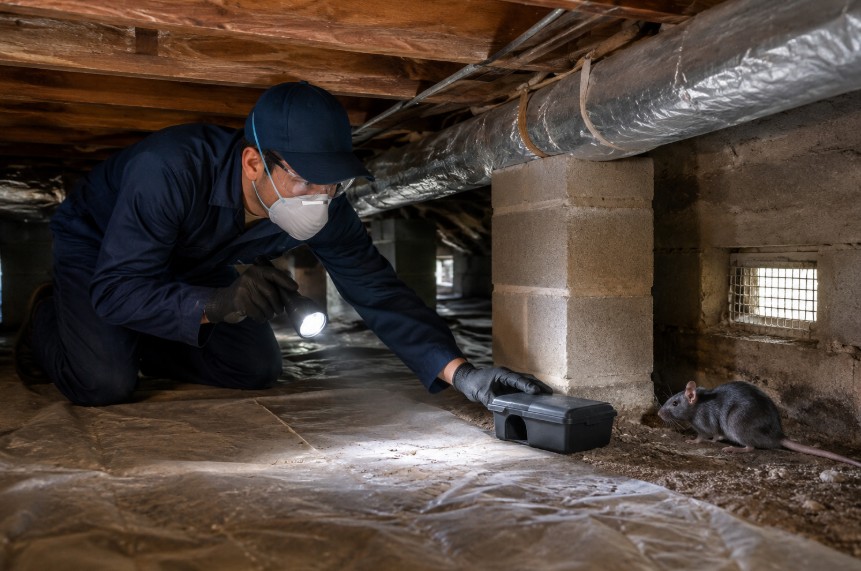
Crawl Space Rodent Removal in Sacramento, CA
Rats and mice don't leave a crawl space on their own — every week they stay under your floor is another week of chewed wiring, contaminated insulation, and droppings drifting up through your ductwork. We inspect, trap, and permanently seal the entry points so they can't come back, with a written guarantee and 24/7 emergency service from Land Park to Natomas.
Sacramento's older neighborhoods weren't built on slabs — most homes from Land Park to Curtis Park to the Fab Forties sit up on a raised, pier-and-beam crawl space, a foundation style that became standard here because of the region's clay soil. That gap under the house is exactly where rats and mice want to be: dark, insulated, close to a food source, and — once a vent screen rusts out or a settlement crack opens along the foundation — easy to get into. If you're hearing scratching under the floor, smelling something musty near the vents, or a home inspector flagged rodent activity during a sale, here's what's actually going on underneath your house and how we fix it.
Why Sacramento Crawl Spaces Attract Rodents in the First Place
Sacramento sits on expansive clay soil that swells during the wet winter months and shrinks during our long, dry summers. That constant movement is why so many homes here — especially anything built before the 1960s in East Sac, Land Park, Curtis Park, and the Newton Booth/Poverty Ridge area — were built with a raised foundation instead of a slab. It keeps the wood framing above the ground and gives easy access to plumbing and electrical, but it also creates a semi-enclosed void that's warmer than the yard, drier than the winter air outside, and mostly hidden from view.
Two things make it worse over the decades:
- Foundation vents lose their screens. Original crawl space vents from the 1920s–1940s often still have their factory screen, which by now is rusted through or missing altogether — a wide-open door for mice and young rats.
- Clay soil settlement opens gaps. As the soil beneath the foundation expands and contracts, hairline cracks form where the foundation meets the ground. A crack a quarter-inch wide is enough for a mouse; a rat can work its way through anything about the size of a quarter.
Newer construction isn't immune either. In Natomas, Elk Grove, and Pocket-Greenhaven, rapid tract-home development on former agricultural and levee-adjacent land displaced existing rodent populations, and builders don't always seal every utility penetration or weep hole before the drywall goes up.
The Rodents We Actually Find in Sacramento Crawl Spaces
Which rodent you're dealing with depends a lot on where in the city you live:
- Roof rats (black rats) — Sacramento's "City of Trees" canopy in East Sac, Land Park, and Curtis Park gives roof rats an aerial route straight to the house: power lines and overlapping branches to the roofline, then down into the crawl space or attic through a gap at the eaves. They're excellent climbers and rarely touch the ground.
- Norway rats — Larger, ground-dwelling burrowers most common near the river corridors and levees — Pocket-Greenhaven, Natomas, Old Sacramento. They dig under foundations and slip in through foundation cracks, weep holes, or gaps where a sewer lateral enters the crawl space.
- House mice — Found citywide, in any structure with an accessible gap and a nearby food source.
- Deer mice — Less common inside city neighborhoods, more often an issue on properties near open land or the American River Parkway; worth flagging separately since deer mice can carry hantavirus, which changes how a cleanup should be handled.
Signs You Have Rodents in Your Crawl Space
- Droppings along the sill plate, ductwork, or insulation
- Fresh holes or worn, greasy rub marks where the foundation meets the siding
- A persistent musty or ammonia-like odor coming up through floor vents or registers
- Scratching, scurrying, or thumping sounds under the floor, usually worse at night
- Tufts of fur caught on foundation vents or insulation
- Chewed or torn insulation and duct wrap
One useful diagnostic: noise directly under your feet points to Norway rats or mice at floor level, while noise overhead in the attic almost always means roof rats.
When Rodent Activity Peaks in Sacramento
Rodent pressure here isn't just a "gross surprise" — it follows a pretty predictable seasonal pattern tied to our climate and geography:
- Fall (Oct–Nov): As the tree canopy in East Sac, Land Park, and Curtis Park thins out, roof rats lose their outdoor cover and move from trees into warm attics and crawl spaces to nest for winter.
- Winter (Dec–Feb): Rising water levels along the American and Sacramento Rivers push levee-dwelling Norway rats out of their burrows and into nearby homes in Natomas and Pocket-Greenhaven.
- Spring (Mar–May): Heavy winter rain saturates clay soil, which can open new settlement cracks around the foundation — new entry points right as breeding season ramps up.
- Summer (Jun–Sep): Activity doesn't disappear; it shifts toward water-seeking behavior, since a crawl space is one of the few consistently cool, humid spots on a property during a Sacramento summer.
Dangers of a Crawl Space Rodent Infestation
- Health risks. Rodent urine and droppings can carry salmonella and leptospirosis, and dust from dried droppings is a respiratory irritant, especially when it's drawn up through floor registers into your living space.
- Structural and electrical damage. Rats and mice gnaw on floor joists, subfloor, and especially wiring — chewed electrical insulation in a crawl space is a documented house fire risk.
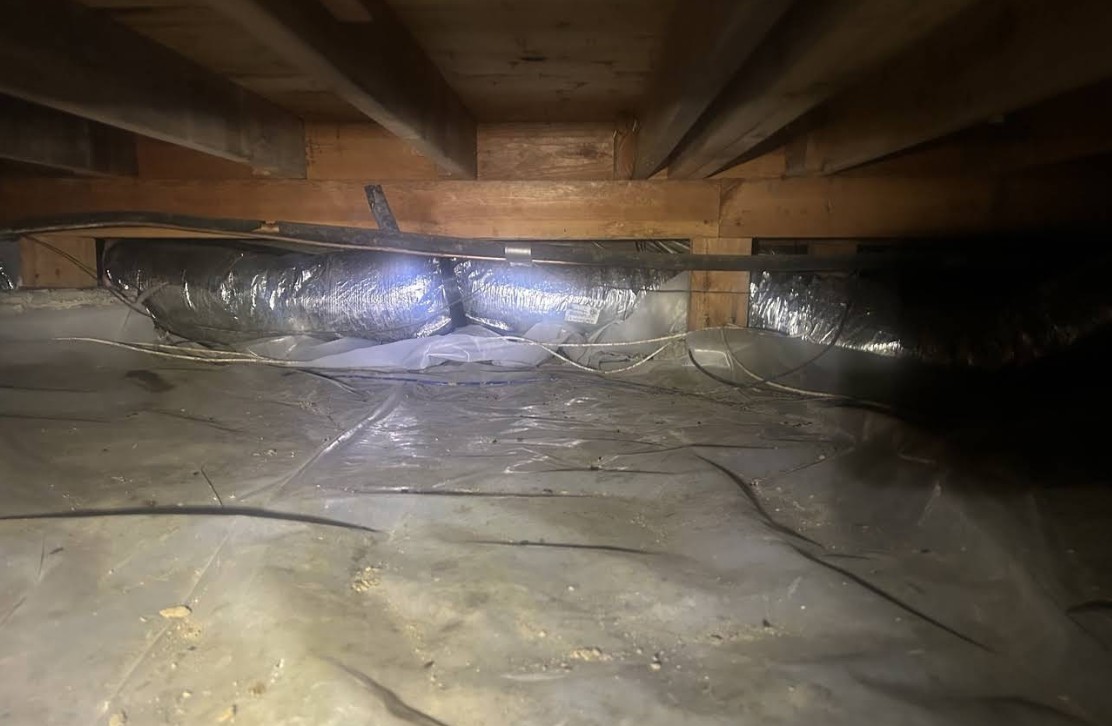
- HVAC contamination. Ductwork frequently runs through the crawl space in raised-foundation homes, so an infestation near the ducts can circulate odor and contaminants through the whole house, not just the crawl space itself.
- Odor and secondary pests. Urine-soaked insulation and nesting material don't just smell bad — they attract fleas, mites, and additional rodents to the same entry points
Our Crawl Space Rodent Control Process
Full crawl space inspection
We check the entire perimeter, vents, sewer lateral penetration point, and duct runs to identify active nesting sites, droppings, and every entry point, not just the obvious ones.
Species identification
Roof rat, Norway rat, house mouse, or deer mouse — the species determines where we focus trapping and exclusion, since roof rats and Norway rats behave completely differently.
Trapping and removal
We use professional-grade trapping methods appropriate to the species and infestation size, checked on a set schedule until activity stops.
Rodent-proofing (exclusion)
Every entry point gets permanently sealed with rodent-proof materials — new vent screens, foundation crack repair, and hardware cloth over gaps larger than a quarter inch. This is the step that actually keeps rodents from coming back; trapping alone almost never solves a repeat problem.
Clean-up and sanitation
Removal of droppings, nesting material, and contaminated insulation, plus disinfection to eliminate the pheromone trail that attracts the next generation of rodents to the same spot.
Restoration and encapsulation
For crawl spaces with significant damage or chronic moisture, we can install a vapor barrier and encapsulation system, which also addresses the humidity that draws rodents in the first place.
What Crawl Space Rodent Removal Costs in Sacramento
Every job is priced after inspection, but homeowners in the Sacramento area typically see costs fall into these ranges:
- Inspection: Often free, or $75–$150 for a detailed crawl space and attic check
- Trapping and removal: Generally $150–$600, depending on infestation size and species
- Exclusion (sealing entry points): $150–$800, based on the number and accessibility of openings
- Cleanup and sanitation: $500–$2,500, depending on how much insulation and ductwork was affected
- Ongoing monitoring plans: Roughly $45–$85/month if you want quarterly checks after the initial job
Older homes with pier-and-beam construction and multiple foundation vents tend to land toward the higher end of the exclusion range simply because there's more perimeter to seal.
Why Choose Us for Crawl Space Rodent Removal in Sacramento
- Licensed under the California Structural Pest Control Board (Branch 2 – General Pest)
- Free crawl space inspection and a written estimate before any work begins
- 24/7 availability for active infestations
- Written guarantee on exclusion work
- Sacramento Local rodent crews who know the difference between a Land Park pier-and-beam crawl space and a Natomas slab-adjacent utility gap — because the fix isn't the same
Areas We Serve
Sacramento neighborhoods: East Sacramento, Land Park, Curtis Park, Midtown, Newton Booth, Oak Park, Tahoe Park, River Park, Pocket-Greenhaven, Natomas, North Natomas, Arden-Arcade, and Campus Commons.
Neighboring cities & towns: Elk Grove, West Sacramento, Folsom, Rancho Cordova, Citrus Heights, Carmichael, Fair Oaks, Orangevale, Davis, Woodland, Roseville, and Galt.
Don't see your area listed? Give us a call — we'll confirm whether we cover your location before you book anything.
FAQs
Why do so many Sacramento homes have crawl spaces instead of basements?
Sacramento's expansive clay soil moves too much for basements to be practical in most cases. A raised, ventilated crawl space keeps the home's framing off the ground and gives easy access to plumbing and electrical, which is why it became the standard foundation for homes built here from the early 1900s through the mid-century period.
How do I know if it's roof rats or Norway rats?
Location is the biggest clue. Noise and damage concentrated at floor level near the foundation usually points to Norway rats, which burrow and rarely climb. Noise overhead — especially if you also see activity in the attic or along power lines and tree branches outside — points to roof rats, which are agile climbers and prefer to enter from the top down.
Can rats get into my crawl space through the plumbing?
Yes. Rats are strong swimmers and can enter through a broken or collapsed sewer lateral, or in some cases swim up through city sewer lines. If a technician finds gnaw marks or entry activity near a plumbing penetration and there's no obvious exterior gap, a sewer line issue is worth checking.
Will sealing the entry points really stop them from coming back?
It's the single most important step. Trapping removes the rodents that are already inside, but if the entry point that let them in stays open, the scent trail they leave behind will draw in new rodents. Exclusion — permanently sealing every gap — is what actually prevents reinfestation.
Is it safe to have kids or pets in the house during treatment?
In most cases, yes. Trapping and exclusion work doesn't require you to leave the home. If a specific situation calls for bait placement, we'll walk you through exactly where it's placed and how it's kept inaccessible to children and pets.
