
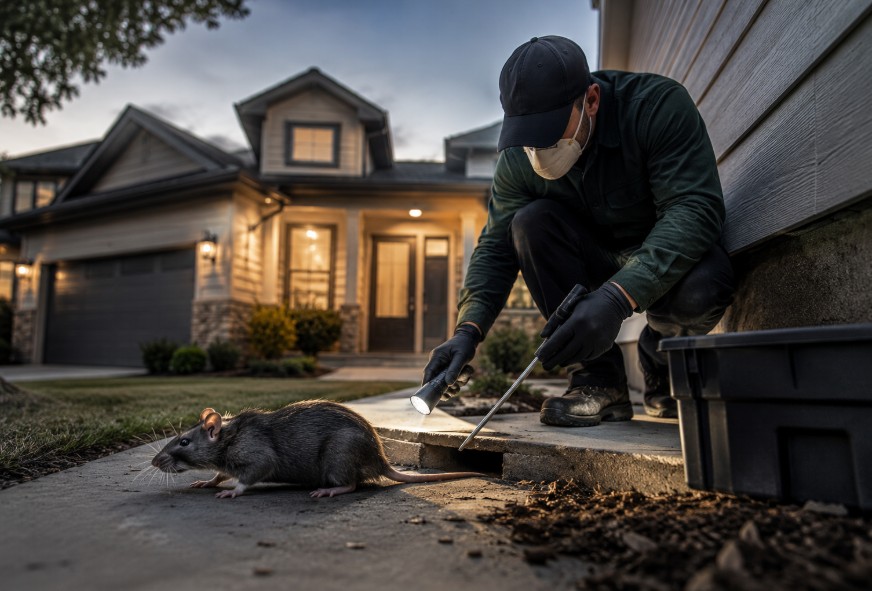
Rat Control in Sacramento
Two kinds of rat live here, one above your ceiling and one under your floor. We work out which you have, trap it, and close the way in.
- Roof rats and Norway rats
- Trapped and removed, not poisoned in your walls
- Entry points sealed in metal
- Licensed and insured
Sacramento has two rats, and they behave like different animals. The roof rat lives in the trees and comes in over your head. The Norway rat lives in the ground and comes in under your feet.
Rat control starts with telling them apart, because nearly everything that follows depends on it: where the traps go, which openings matter and what to change in the yard.
Sacramento's two rats
| Trait | Roof rat | Norway rat |
|---|---|---|
| Build | Slim, 5 to 10 ounces, tail longer than the body, pointed nose | Stocky, 7 to 18 ounces, tail shorter than the body, blunt nose |
| Lives outdoors in | Trees, ivy, dense shrubs, riverbank brush | Burrows along foundations, under woodpiles, sheds and compost |
| Lives indoors in | Attics, wall and ceiling spaces, cabinets | Crawl spaces, basements, the ground floor |
| Eats first | Fruit, nuts, snails | Grain, meat, pet food, garbage |
| Droppings | About half an inch, pointed ends | About three quarters of an inch, blunt ends |
| Nightly range | 300 feet or more | 100 to 500 feet |
| Breeding | 3 to 5 litters a year, up to 8 young each | 4 to 6 litters a year, 20 or more young raised |
Where each one turns up
Roof rat
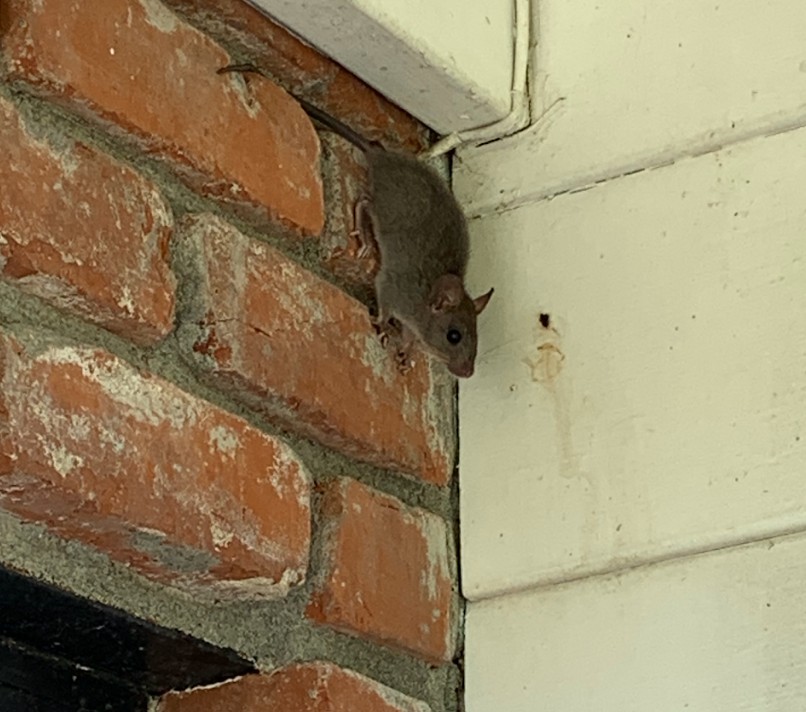
Roof rats are the common attic rat here. The old tree-lined streets of East Sacramento, Land Park, Curtis Park and Midtown give them a road from limb to limb, but they are just as settled in newer suburbs with fences, fruit trees and tile roofs.
Norway rat
Norway rats go where there is soil to dig beside something to eat. That means under raised-foundation houses, along the river levees, around dumpsters and compost bins, and in the old sewer lines of the central city.
Why rats are so persistent in Sacramento
In 2025 a national pest company's yearly ranking put Sacramento 19th among American cities for new rodent jobs. Five things keep it on that list.
1 Something is ripe in every season
Citrus hangs on the trees through winter and spring. Summer brings vegetable gardens and stone fruit, and fall brings nuts and late fruit. A roof rat in a Sacramento back yard never has a hungry month. On lemons it often eats only the rind and leaves the peeled fruit hanging.
2 Winters that don't thin them out
Cold is what holds rat numbers down in other places. A 2025 study in the journal Science Advances tracked rat reports in 16 cities and found numbers rising in 11 of them, fastest where temperatures had warmed most. Sacramento wasn't one of the 16, but its winters are already mild. One of the large pest companies working here describes roof rat pressure as high all year, with little seasonal slowdown.
3 Dry summers that push them toward houses
From June to September almost no rain falls. As the open ground dries out there is less to eat and drink away from people, and rats close in on irrigated yards, pet bowls and anything dripping.
4 Winter rain on low ground
More than half the year's rain arrives between November and February. Burrows along fences, slabs and levees take on water, and Norway rats look for somewhere dry. A crawl space is dry.
5 They breed, commute and learn
The table above has the breeding numbers. Add a nightly range longer than a football field, so the rat in your attic may feed three yards away. Add a deep suspicion of anything new, which is why a rat can ignore a fresh trap for days.
Poison used to cover for all of this. Since 2025 most rat poisons can't be used around California homes, so rats have to be trapped out and built out. After the first restrictions took effect, Sacramento-area pest companies told CBS13 that requests for rat service had jumped.
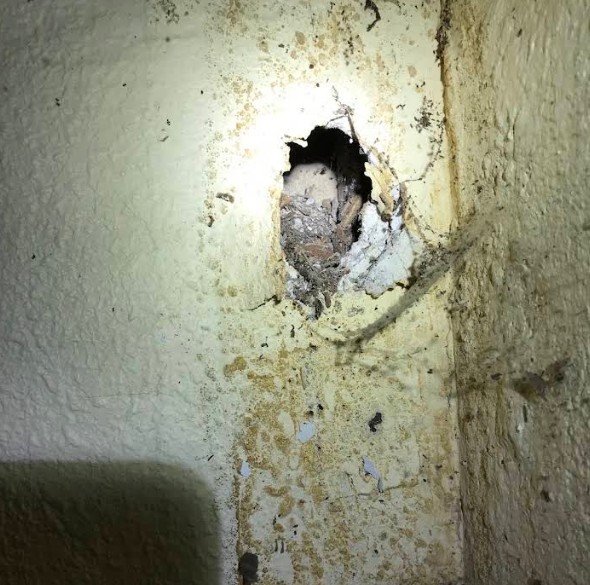
Signs of rats in your home
Rats leave distinct physical traces depending on whether they enter high into attic spaces or dig low along the foundation. Identifying these signs early prevents widespread structural and electrical damage.
Roof rats
- Running or scratching overhead after dark
- Oranges emptied through a small hole, lemons with the rind chewed off
- Rats crossing the fence top or the utility line at dusk
- Pointed droppings about half an inch long in the attic or garage rafters
- Dark rub marks on rafters and pipes
Norway rats
- Burrow holes beside the foundation, under the shed or by the compost bin
- Blunt droppings about three quarters of an inch long at floor level
- Gnawing at the bottom of the garage door
- Vegetables eaten in the garden bed
- Noise under the floor, not above the ceiling
Either one
- Gnaw marks about 4 millimeters wide. A mouse leaves marks half that size.
- A dog or cat turning up with a dead rat
- A drowned rat in the pool
What rats damage, and what they carry
Rat pest control, step by step
Roof rat or Norway rat, and how many places they are using. Our inspection covers the roof, attic, crawl space and yard.
Roof rats are loyal to a nest. If the ivy, the woodpile or the untrimmed palm stays, they come back to it.
High for roof rats, low for Norway rats. See rodent trapping.
Every opening over a quarter inch, in metal or mortar. See rodent exclusion.
Droppings, nests and ruined insulation. See attic rat removal.
What doesn't work on rats
When to call a rat exterminator in Sacramento
What rat control costs in Sacramento
Companies that publish prices for rat work in Sacramento show a wide spread, because the jobs differ so much. Three things decide where yours falls:
Roof rats mean roof and attic work. Norway rats mean ground and crawl space work. Some houses need both.
Sealing is usually the largest part of the job.
A few weeks is trapping and a spot cleanup. A year can mean insulation.