
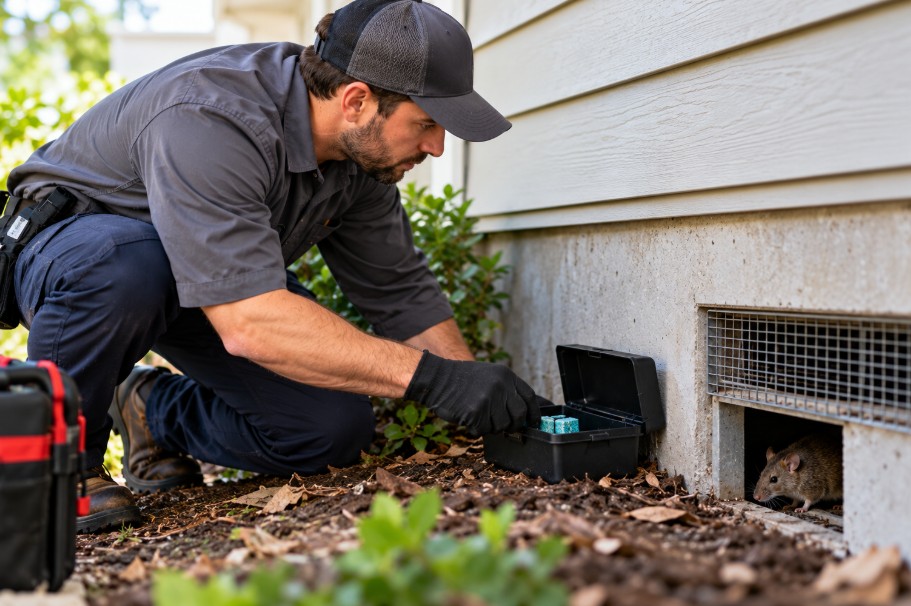
Sacramento Rodent Control That Finds the Hole, Not Just the Rat
Rats in the attic, mice in the garage, something moving under the house. We trap them, seal every way in, and clean up what they left behind.
- Same-day service available
- Roof, attic and crawl space checked, with photos
- Trapping and sealing that lasts
- Licensed and insured
If something ran across your ceiling at two this morning, you have company. Sacramento is a very good place to be a rat. There is fruit on the trees most of the year, two rivers, winters that rarely freeze hard, and a lot of houses old enough to have a gap somewhere.
We're a licensed and insured rodent control company in Sacramento. We don't spray for ants or tent for termites. We get rats and mice out of buildings, close the openings they used, and clean up what they left.
Catching the rat is the easy part. A trap handles one rat. Finding the half-inch gap behind the gutter is what stops the next one, so that is where most of our time on a job goes.
Our rodent removal services in Sacramento
Most jobs use several of these together. Each one links to its own page if you want the detail.
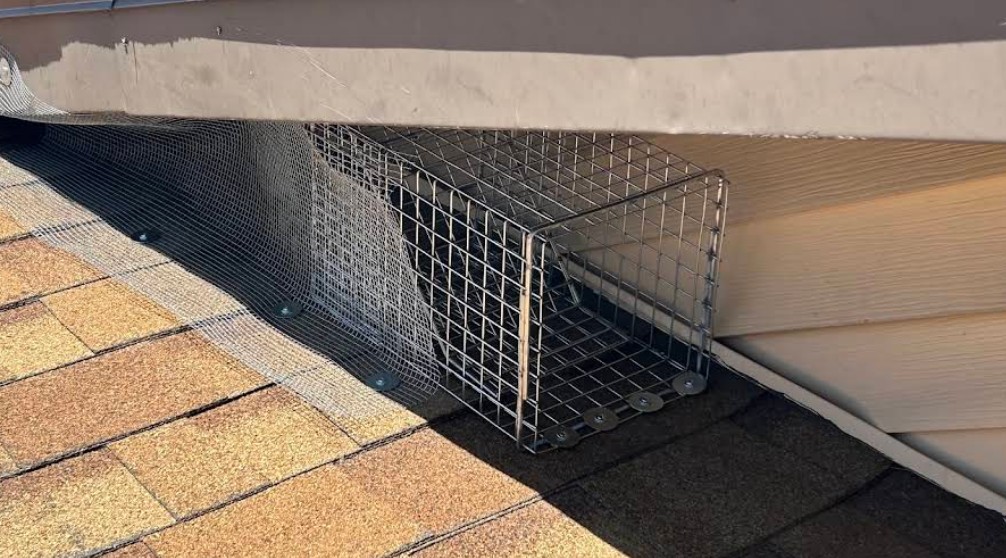
Rodent inspection Sacramento
We crawl the attic, the crawl space and the roof line. You get a photo-mapped report of every entry point, run, latrine and damaged wire before we quote a fix.
Attic cleanup and decontamination
Feces, urine and pheromone trails pulled out under negative air. We sanitise with an EPA-registered virucide and replace contaminated insulation so the house stops smelling like a nesting site.
Rodent exclusion and proofing
Metal flashing, copper mesh and steel vent covers installed so rats can't chew back in. If they can't get in, you don't need ongoing traps.
Dead animal removal Sacramento
Rats that crawled into a wall or duct before dying. We find the carcass, extract it, treat the odor at the source and seal the cavity.
Crawl space cleanup and repair
Vapor barriers replaced, wet or torn subfloor insulation pulled, and droppings vacuumed out so rodent odors don't rise into living spaces.
Commercial rodent control Sacramento
Restaurants, warehouses and retail. Discreet service, health-inspection-ready documentation and perimeter tamper-resistant bait stations where appropriate.
Emergency rodent removal Sacramento
Rats inside living quarters, chewing through dishwasher lines, or scratching behind bedroom drywall at night. Same-day response.
Rodent season in Sacramento
There is no closed season here. Rats breed and feed all year. What changes is where they are.
October to February
The main season. Nights cool off, the rain arrives, and rats and mice move into attics, crawl spaces and garages. This is when most people first hear them.
Winter into spring
Mild weather and ripe oranges mean roof rats have no lean months. Food is abundant across Sacramento backyards.
Summer
Summer is dry. Rats go where the water is: irrigated yards, pet bowls and air conditioner drains.
Common rodents we remove from Sacramento homes
Four species turn up in houses here. Which one you have decides where the traps go, so we settle that first.
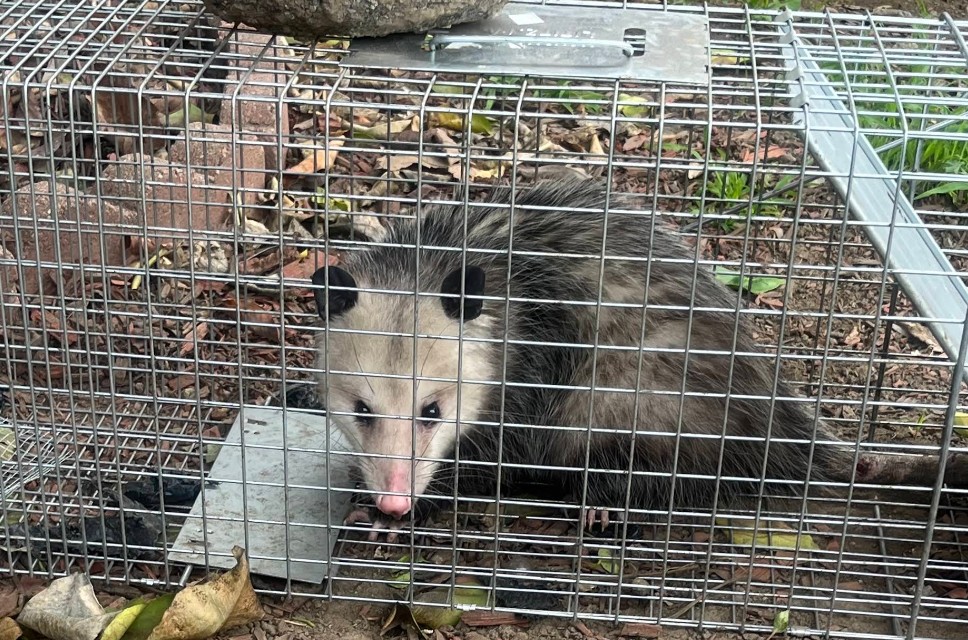
Roof rat
Slim, 5 to 10 ounces, with a tail longer than its body. Climbs anything. This is the one in most Sacramento attics. It nests high, in attics, wall voids and the space above a dropped ceiling, and comes down to eat.
Norway rat
Heavier, up to about 18 ounces, with a blunt nose and a tail shorter than its body. A digger. Look for burrow holes along the foundation, under a shed, beside the compost bin or in a woodpile. Indoors it stays low: crawl spaces, basements, the ground floor. One female can raise 20 or more young in a year.
House mouse
Small enough to use a gap a quarter inch wide. Garages, pantries, the water heater closet, the wall behind the stove. Its droppings are the size of a grain of rice. Rat droppings are closer to an olive pit.
Deer mouse
Brown on top with a white belly and feet. Mostly an edge-of-town problem: lots near open fields, the river parkways and the foothills. It is the one California rodent tied to hantavirus. State health officials say the rats and house mice typical of city neighborhoods don't carry it. So a roof rat in a Land Park attic is a mess and a wiring hazard, not a hantavirus case. A shed on a rural lot is different, and droppings there get wetted down and wiped up, never swept.
City rats and mice are still a health problem. They contaminate food with salmonella, and rats are linked to leptospirosis, typhus and rat-bite fever. They also chew wiring, which is how an attic problem turns into a fire.
Squirrels, for what it's worth, keep day hours. Noise at 2 a.m. is a rat or a mouse. Noise at sunrise and again before dark is usually a squirrel, and that is a different job.
Signs you have rats or mice
Rats are rarely seen. The signs are what give them away.
Sacramento Attic Recording
Rodent sound from attic
Listen to the actual nocturnal scratching and scampering patterns recorded in a Sacramento attic ceiling void:
Noise at night
Scratching or running in the ceiling or walls after dark.
Droppings
Along walls, in the garage or near pet food.
Hollow fruit
Orange rinds left hanging empty on the tree, or gnawed nuts on the ground.
Rub marks
Dark, greasy smudges on rafters, pipes and wall edges where they run the same route every night.
Burrows
Fresh holes along the foundation, under the shed or beside the compost bin.
Movement at dusk
Rats running the fence top or the utility line.
Chewed things
Wiring, stored boxes, pet food bags.
What the pets bring you
A cat or dog turning up with a dead rat.
Where we remove rodents from
We inspect and treat every level of the structure, from the highest roof ridge to the subfloor soil.
Attics
Roof rats nest in the insulateon and run the rafters. Attic rodent removal. →
Walls and ceilings
The gaps between studs and the space above a dropped ceiling.
Crawl spaces and basements
Mostly Norway rats, under raised-foundation houses. Crawl space rodent removal. →
Garages
Behind stored boxes, inside cabinets, around the water heater.
Kitchens and pantries
Behind the stove, under the sink, in the back of low cabinets.
Sheds and yards
Under shed floors, in woodpiles, ivy and compost bins.
Restaurants and apartment buildings
Storerooms, dropped ceilings and trash enclosures.
How Sacramento houses let them in
A rat needs a gap of about half an inch. Where it finds one depends a lot on when your house was built.
Raised-foundation homes in the old neighborhoods
Midtown, Boulevard Park, Southside Park, East Sacramento, Curtis Park, Oak Park and Land Park are full of houses from the 1900s through the 1930s. Many are high-water bungalows, built up off the ground with a basement or a tall crawl space underneath. They are beautiful and they leak rodents.
Start with the foundation vent screens, which often rusted through decades ago. Then check where the gas and water lines pass through the wall, the basement windows, and any addition that never quite met the original house. Up top it is gable vents, open eaves, and whatever tree has grown over the roof since 1925.
Mid-century ranch homes
Arden-Arcade, Carmichael, Tahoe Park, South Land Park and much of the older county are mostly single-story houses from the late 1940s through the 1970s, many of them ranch style. About three in ten of the city's homes went up between 1940 and 1969, so there are a lot of them.
Low rooflines, big trees, attached garages. Here it tends to be the spot where two rooflines meet, the gable vents, the plumbing stacks, and the bottom corners of the garage door where the rubber seal stops short.
Newer tile-roof subdivisions
Natomas, Elk Grove and the newer parts of Rancho Cordova and Roseville are mostly stucco on a slab with concrete tile roofs. There is no crawl space to worry about. But the open ends of the tiles along the eave are a rat-sized doorway if the closure strips are missing, and the hole cut for the air conditioner lines is usually bigger than it had to be.
Many of these streets also back onto fields, drainage canals and detention basins. When a field gets graded for the next phase of houses, whatever lived there goes looking for a new address.
Apartments, duplexes and restaurants
Shared walls and shared dumpsters mean one unit can't fix it alone. If you manage a building in Midtown or downtown, the plan has to cover the whole structure and the trash enclosure. Otherwise you are moving rats from one unit to the next.
How a job runs, start to finish
From first inspection through permanent exclusion and post-treatment monitoring.
-
Inspection
Roof, attic, crawl space and yard, with photos and a written price.
-
Trapping
Traps set on the runways and checked until they stay empty.
-
Sealing
Every opening closed in metal or mortar.
-
Cleanup
Droppings, nests and ruined insulation taken out.
-
Follow-up
We come back to check the traps and the repairs until the house stays quiet.