
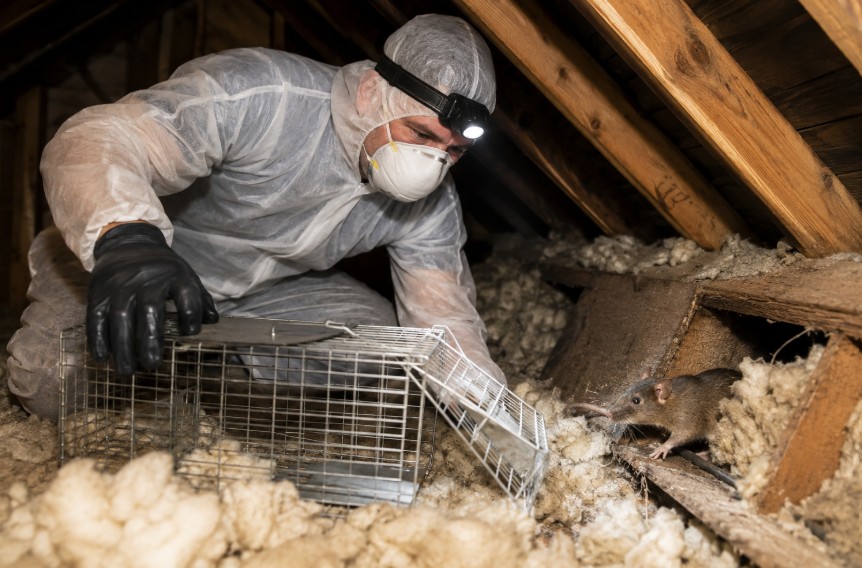
Attic Rodent Removal in Sacramento, CA
Scratching overhead at 2 a.m., a musty smell drifting out of the hallway vent, a dark smudge trailing across your rafters — that's not a crawl space problem, that's a roof rat problem, and it's living directly above your ceiling. We climb up, find out how they got there, remove them, and seal the roofline so they don't just come back next October.
If you live under the tree canopy in East Sacramento, Land Park, or Curtis Park, your attic is sitting at the end of a highway roof rats have been using for decades — branches, power lines, and rooflines that connect house to house across the whole block. Here's why that happens in this city specifically, and what actually needs to happen to stop it.
Why Sacramento Attics Are Such Easy Targets
Roof rats don't burrow — they climb. And Sacramento's older, tree-lined grid neighborhoods hand them everything they need to get from the ground to your rafters without ever touching dirt.
Two things stack up against homes here in particular:
The tree canopy meets the power grid
SMUD has required new subdivisions to run electric lines underground since the late 1980s, which is why newer areas like North Natomas and Elk Grove mostly don't have overhead wires touching the rooflines. But East Sacramento, Land Park, Curtis Park, and the Fab Forties were built decades before that rule existed. Mature elms and oaks planted 60-plus years ago now brush right up against those wires and the roof edge. For a roof rat, that's an uninterrupted bridge from the ground to your eaves.
The building materials have aged out
A lot of the Craftsman and Tudor Revival homes in these same neighborhoods still have their original fascia boards and attic vent screens. Sacramento's summer heat and winter rain cycle dries and swells that wood year after year, and eventually a fascia board rots or a screen rusts through — both are textbook roof rat entry points.
Even newer homes aren't fully off the hook: builders miss sealing utility penetrations at the roofline more often than you'd think, and any tree limb within a few feet of a roof edge is an open invitation regardless of the home's age.
The Rodent We're Almost Always Talking About Up There
Attics and crawl spaces don't have the same rodent problem, and it's worth being specific about that. Norway rats — the ground-burrowing rats you'll find near Sacramento's levees and river corridors — are heavy-bodied and don't climb well. They almost never make it into an attic.
Roof rats are the ones you're dealing with overhead. They're smaller, leaner, exceptional climbers, and built for exactly this kind of elevated, enclosed space. House mice show up in attics too, usually riding along the same entry points, though they're just as happy nesting in a wall void or a stack of storage boxes.
How They're Actually Getting Onto Your Roof
A roofline inspection is about tracing the route backward, not just looking for a hole. The most common paths we find on Sacramento homes:
A rat only needs a gap about the size of a quarter. If they can fit their head through, the rest of the body follows — and if the existing gap is a little too small, they'll simply gnaw it wider, since their front teeth never stop growing.
Signs You Have Rodents in the Attic, Not the Crawl Space
- Noise directly overhead, especially right after sunset — roof rats are nocturnal and most active in the first few hours of darkness
- Dark, greasy rub marks along rafters and joists where rats travel the same route night after night
- Insulation that looks flattened, torn, or tunneled through in a concentrated area
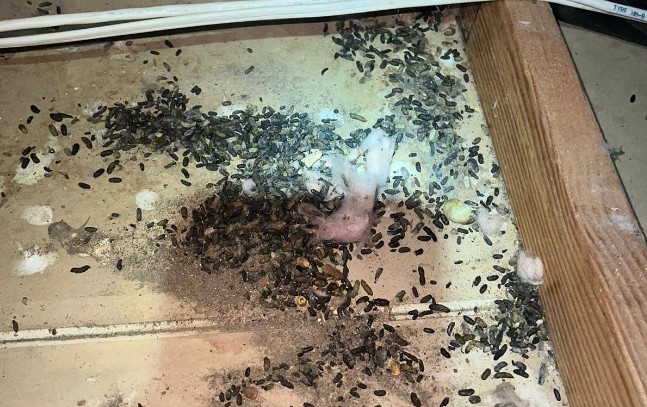
- Rice-shaped droppings clustered near the attic access hatch, HVAC unit, or along wall plates
- A stale, ammonia-like odor that seems to come from the ceiling rather than the floor
- Recessed light fixtures flickering or warm to the touch — a sign of chewed wiring nearby
The Part Most Homeowners Don't Think About: What It's Costing You Right Now
A crawl space infestation is mostly a moisture and structural problem. An attic infestation is, just as often, an energy bill problem — and in Sacramento, that matters more than almost anywhere else in California.
On a typical July afternoon here, attic temperatures regularly climb into the 130–160°F range, sometimes 40 to 60 degrees hotter than the outside air. A lot of Sacramento's housing stock, especially homes built between the 1950s and 1980s, was insulated well below what California's Title 24 energy code now recommends for our climate zone. When rats flatten, soil, and tunnel through that insulation, the R-value drops even further, right when your AC is already working overtime against triple-digit heat.
If your ductwork also runs through the attic — which it does in a lot of homes retrofitted with central air — chewed duct seams let cooled air leak straight into that 150-degree space instead of your bedroom, and SMUD bills climb accordingly.
In other words: the longer an attic infestation sits, the more it's quietly costing you every single afternoon in cooling costs, not just in repair bills down the road.
When Attic Activity Spikes in Sacramento
Roof rat pressure on Sacramento attics follows the seasons here pretty closely:
As the tree canopy in East Sac, Land Park, and Curtis Park thins out, roof rats lose their outdoor cover and start looking for a warm, dry place to spend the winter — your attic checks every box.
Once nested in, breeding continues indoors regardless of weather, since the attic stays warmer and drier than anywhere outside.
Litters from the winter reach maturity and start looking for their own territory, which is when homeowners often notice a sudden jump in activity or a second area of the attic getting used.
Once daytime attic temperatures climb past 130°F, activity often shifts toward the cooler, shadier parts of the attic near exterior walls and eaves — worth knowing if you're trying to pinpoint a nest location during a summer inspection.
Our Attic Rodent Removal Process
Roofline and attic inspection
We check the entire roof perimeter from the ground and walk the attic itself, tracing rub marks and droppings back to the actual entry point, not just the nearest opening.
Species confirmation
Roof rat or house mouse changes where we focus trapping, since the two nest and travel differently.
Trapping
Professional-grade trapping placed along confirmed travel routes and nesting sites, monitored on a set schedule.
Roofline exclusion
Fascia and soffit repair, heavy-gauge screening on vents, sealing utility penetrations, and a chimney cap if needed. We'll also flag any tree limbs that need trimming back from the roofline, since that's often the single biggest factor in repeat infestations.
Insulation assessment
Light, localized contamination can sometimes be spot-treated. Insulation that's matted down, urine-saturated, or torn through in a large area typically needs to be removed and replaced to restore both air quality and R-value.
Sanitation
Disinfection of the affected area to remove the scent trail that draws in the next generation of rodents.
What Attic Rodent Removal Costs in Sacramento
Pricing depends heavily on how long the infestation has been active and how much insulation damage resulted, but typical ranges look like this:
For a detailed roofline-and-attic assessment.
Standard trapping program to clear the infestation.
Sealing entry points to prevent reentry.
A few hundred dollars for small, localized contamination.
For heavily contaminated attics, depending on square footage and insulation type.
Why Choose Us for Attic Rodent Removal in Sacramento
Areas We Serve
Sacramento neighborhoods:
East Sacramento, Land Park, Curtis Park, Midtown, Newton Booth, Oak Park, Tahoe Park, River Park, Pocket-Greenhaven, Natomas, North Natomas, Arden-Arcade, and Campus Commons.
Neighboring cities & towns:
Elk Grove, West Sacramento, Folsom, Rancho Cordova, Citrus Heights, Carmichael, Fair Oaks, Orangevale, Davis, Woodland, Roseville, and Galt.
