
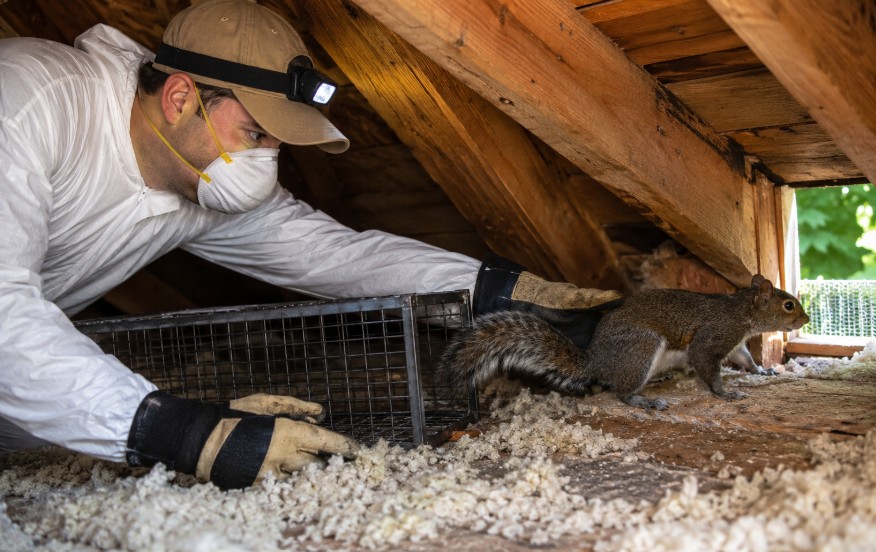
Attic Squirrel Removal in Sacramento
If something is running around above your ceiling in the middle of the afternoon, it's not a rat — squirrels are active by day, and an attic full of daytime footsteps, chewed fascia boards, and a growing pile of leaves and insulation in the corner is a classic Sacramento squirrel problem. We find out how they're getting in, remove them the way California law actually requires, and seal your roofline so the next generation doesn't just move back in.
Why Sacramento Attics Attract Squirrels
The squirrel you're probably hearing is the Eastern fox squirrel — not native to California at all. They were released in Sacramento in the early 1900s, the same way they were introduced to parks in San Francisco, Los Angeles, and other California cities around that era, and they've spread through the urban canopy ever since. Sacramento's "City of Trees" reputation is exactly what let them thrive here: mature street trees in East Sacramento, Land Park, Curtis Park, and the university-area neighborhoods give them a continuous, shaded route from block to block, and they're just as comfortable running a power line as a branch.
Closer to the American River — around the Parkway, Fair Oaks, and Carmichael — you'll also find the Western gray squirrel, which actually is native to this region. It matters which one you have, and not just for identification purposes. As we get into below, California treats native and non-native squirrels differently under the law, and that changes what a technician is legally allowed to do once one is trapped.
Either species ends up in the same place for the same reason: a Sacramento attic is warm, dry, dark, and — compared to a hollow tree limb — a lot more structurally sound for raising a litter. Once a squirrel finds a gap at the roofline, especially near a tree branch or power line that's already brought them within a few feet of the house, it doesn't take much for them to widen it.
Squirrel or Rat? How to Tell What's Actually in Your Attic
It's a fair question, since the entry points often look similar. A few reliable differences:
- Time of day. Squirrels are diurnal — most active in the early morning and late afternoon. Nighttime scratching is almost always a rat, not a squirrel.
- Sound. Squirrels are heavier and noisier, with a rolling, tumbling sound as they move, versus the quicker scurrying of a rat.
- Nesting material. Squirrels build a bulky, visible nest (a "drey") out of leaves, twigs, and shredded insulation. Rat nesting is usually flatter and less obvious.
- Droppings. Squirrel droppings are larger, more oval and rounded, and usually found in small clusters rather than scattered trails.
If you're not sure which you're dealing with, that's exactly what the inspection is for — and it matters, because the legal removal process is different for each.
Signs of Squirrels in Your Sacramento Attic
- Running, scratching, or rolling sounds overhead, mainly during daylight hours
- A visible nest of leaves, twigs, and shredded material tucked into an eave or attic corner
- Clusters of oval, rounded droppings near the entry point or nest site
- Chewed electrical wiring, and fresh gnaw marks around soffit vents, fascia boards, or roof shingles
- New holes or enlarged gaps at the roofline that weren't there a season ago
- A musky odor concentrated near the nesting area
Dangers of an Attic Squirrel Infestation
- Physical damage. A squirrel's front teeth never stop growing, so they gnaw constantly to keep them worn down — and your attic's wiring, rafters, and roof sheathing are convenient targets. Chewed electrical wiring in particular is a documented house fire risk, and it's one of the more common reasons insurance adjusters ask whether a home has had a wildlife intrusion.
- Health issues. Squirrel droppings and nesting material can harbor parasites like fleas and mites, and accumulated waste degrades attic air quality over time. Bites and scratches from a cornered squirrel, while uncommon, also carry infection risk.
California Wildlife Law — and Why It Changes How This Job Gets Done
This is the part that catches a lot of homeowners off guard: squirrels aren't treated like rats under California law, because they're classified as wildlife, not just a structural pest.
- You can't legally relocate a trapped squirrel to a park or open space across town. California Fish and Game Code requires trapped wildlife to be released on-site or in the immediate vicinity, or humanely dispatched — driving it across the city and letting it go isn't a legal option.
- Poison bait is illegal for tree squirrels in California, regardless of species. Any legitimate removal has to be trap- and exclusion-based.
- Native Western gray squirrels require a CDFW depredation permit before any lethal removal, and the method of take is restricted. Non-native Eastern fox squirrels causing property damage don't require that permit, but every other rule above still applies.
Our Attic Squirrel Removal Process
Inspection
We check the roofline, soffits, vents, and attic interior to find every active and previously-used entry point, and confirm whether we're dealing with squirrels, rats, or both.
Trapping and removal
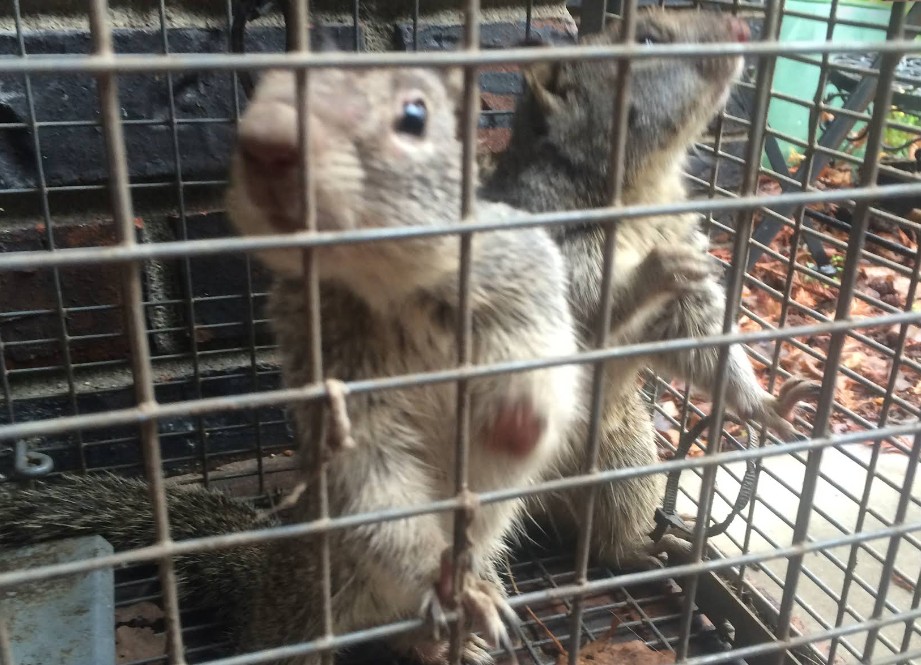
Depending on the situation, this means a one-way exclusion door at the main entry point, interior trapping if there's an active nest, or an exterior trap set along a confirmed travel route — always handled in line with the state requirements above.
Exclusion and sealing
Once the attic is confirmed clear, every entry point gets permanently sealed with materials squirrels can't chew through — not just the main hole, but the smaller secondary gaps they've been testing along the way.
Attic cleaning and restoration
Removal of nesting material and droppings, sanitation of the affected area, and repair of any compromised insulation.
Preventing Squirrels From Coming Back in Sacramento Attics
- Sealing cracks and gaps at the roofline before they become an entry point, not after
- Trimming back tree branches that overhang or touch the roof — the single biggest access point in Sacramento's tree-canopy neighborhoods
- Installing squirrel guards on power lines and chimney caps where squirrels have previously gained access
- Scheduling a seasonal inspection ahead of spring and late-summer breeding periods, when squirrels are most actively searching for a new nesting site
Attic Remediation After Squirrel Removal
Once the squirrels are out and the entry points are sealed, the condition of your attic itself still matters:
- Cleanup of droppings, urine staining, and leftover nesting debris
- Removal and replacement of insulation that's been compressed, soiled, or tunneled through, since damaged insulation loses much of its effectiveness and can hold onto odor long after the animals are gone
- Rodent-resistant insulation options, for homeowners who want an added layer of protection against future intrusions, whether from squirrels, rats, or mice
Cost of Attic Squirrel Control & Removal in Sacramento
Every squirrel job is different — the price depends on how many entry points there are, how accessible your roofline is, whether a one-way door or active trapping is needed, and how much insulation or wiring was damaged. Because of that, we inspect first and provide a written estimate before any work begins, rather than quoting a number over the phone that may not reflect your actual attic.
Why Choose Sacramento Rodent Expert for Attic Squirrel Problems
- Licensed pest & rodent control operator, familiar with California Fish and Wildlife regulations specific to squirrel trapping and release
- Humane, legally compliant removal methods — no poison, no illegal relocation
- Upfront, itemized pricing before any work begins
- 24/7 availability for active infestations
- Written guarantee on exclusion work
Areas We Serve
Sacramento neighborhoods: East Sacramento, Land Park, Curtis Park, Midtown, Newton Booth, Oak Park, Tahoe Park, River Park, Pocket-Greenhaven, Natomas, North Natomas, Arden-Arcade, and Campus Commons.
Neighboring cities & towns: Elk Grove, West Sacramento, Folsom, Rancho Cordova, Citrus Heights, Carmichael, Fair Oaks, Orangevale, Davis, Woodland, Roseville, and Galt.
FAQs
Timing is the easiest clue — squirrels are active during the day, while rats are almost always nocturnal. Squirrels also build a bulkier, more visible nest and leave larger, more rounded droppings than rats.
No — California law requires trapped squirrels to be released on-site or in the immediate vicinity, or humanely dispatched. Driving one across town and releasing it isn't a legal option, which is why exclusion (letting them leave and then sealing the entry point) is usually the better approach for an active infestation anyway.
Non-native Eastern fox squirrels causing property damage generally don't require a permit to trap, but the release and disposal rules under California Fish and Game Code still apply, and native Western gray squirrels require a CDFW depredation permit before any lethal removal. Getting the species and the method wrong can result in fines.
Late winter into spring, and again in mid-to-late summer, which lines up with the two breeding periods for tree squirrels in this region. A female looking for a safe place to raise a litter will actively search out attics during those windows.
Not if it's done correctly. We confirm the attic is clear — including checking for dependent young that can't yet leave on their own — before any permanent sealing happens. That's part of why a one-way exclusion door, rather than sealing on day one, is the standard approach.
