
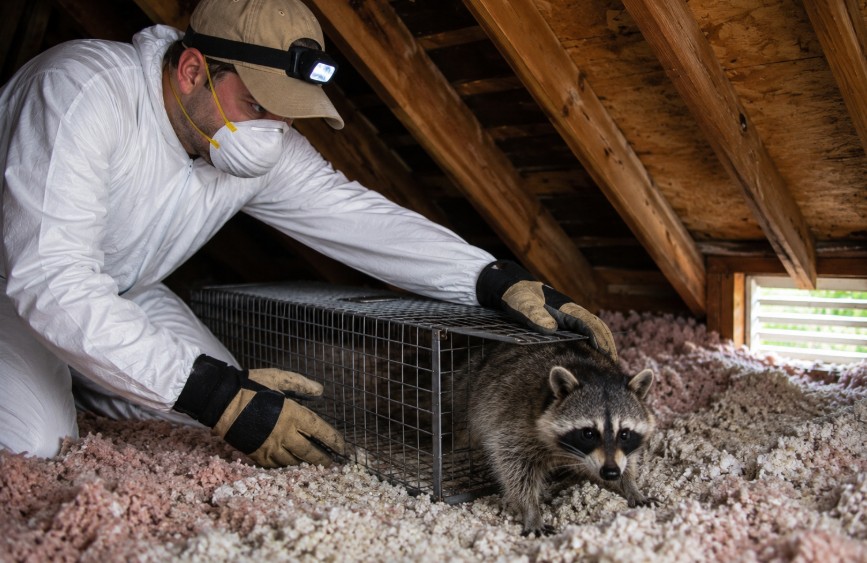
Attic Raccoon Removal in Sacramento, CA
Heavy footsteps overhead, a torn-open gap at the roofline, and a pile of droppings collecting in one spot — a raccoon in the attic doesn't leave much doubt once you know what to look for. Raccoons are strong enough to rip open weak soffit and vent covers that a rat or squirrel could never get through, and in Sacramento's neighborhoods, they rarely need much encouragement to try. We find out how they got in, remove them the way California law actually requires, and seal the roofline so it doesn't happen again.
Why Sacramento Attics Draw Raccoons In
Sacramento's raccoons aren't just passing through from the American River Parkway, though that wildlife corridor certainly helps keep the population healthy. City of Sacramento Animal Care Services has been direct about this for years: raccoons are common throughout the central city, and because so many are born and raised in residential neighborhoods, they've largely lost their fear of people. They move through storm drains and the network of urban creeks — Arcade Creek, Chicken Ranch Slough, and the drainage canals that thread through North Sacramento and Natomas — using them the same way they'd use a natural creek bed, then climb into a nearby yard looking for food and shelter.
Once they're in your yard, the entry points are predictable: unsecured trash cans, pet food left out overnight, fruit trees, and compost bins all read as an easy meal. And once a female raccoon is looking for somewhere warm and defensible to den, Sacramento's older homes — especially the Craftsman and Tudor Revival houses in East Sacramento, Land Park, and Curtis Park with original masonry chimneys — offer exactly what she's after. Uncapped chimneys, gaps where soffit meets fascia, and roof or gable vents with thin factory screening are the most common ways in. Raccoons are also strong climbers and will use a downspout as readily as a tree limb to get to the roofline.
Raccoon, Squirrel, or Rat? Telling the Difference Overhead
All three end up in the same part of the house, but the clues are different enough to tell them apart before anyone even goes up into the attic:
Raccoons
Heavy and deliberate — think thumping, dragging footsteps, mostly after dark, sometimes with chirping or growling vocalizations if kits are present. They leave large, torn entry points and tend to use one concentrated spot as a bathroom (a "latrine") rather than scattering droppings around.
Squirrels
Active during the day, lighter on their feet, and build a visible nest of leaves and twigs.
Rats
Active at night like raccoons, but much lighter and quicker, and leave small, scattered droppings rather than a concentrated pile.
If you're only going on sound, time of day and weight are usually the fastest way to narrow it down.
Signs of Raccoons in Your Sacramento Home's Attic
- Heavy thumping or dragging sounds overhead, typically at night
- Chirping, growling, or chittering sounds, especially if a litter of kits is present
- A large, torn or chewed opening at the soffit, fascia, roof vent, or chimney — bigger and more forceful-looking than typical rodent damage
- A concentrated pile of droppings in one spot (a latrine), rather than scattered trails
- Muddy paw prints on downspouts, gutters, or exterior walls near the entry point
- Insulation flattened or matted down in one large area, consistent with a den site
- A strong, musky odor near the entry point or nesting area
Listen: Audio of raccoon in home attic
Dangers of an Attic Raccoon Infestation
Physical damage. Raccoons are strong enough to tear open soffit material, bend flashing, and rip through roof vents that would stop a smaller animal. Once inside, they compress and soil insulation over a wide area and will chew wiring and ductwork, both of which get expensive to repair the longer the animal stays.
Health issues. Raccoon droppings can carry raccoon roundworm (Baylisascaris procyonis). California's public health department has been clear that human infections are genuinely rare here — fewer than ten confirmed cases statewide since the early 1990s — but the eggs are microscopic, can persist in soil and old insulation for years, and resist most household disinfectants, which is why a raccoon latrine in an attic needs proper cleanup rather than a quick wipe-down.
Worth noting on rabies specifically: unlike much of the eastern United States, California does not have an established raccoon rabies variant circulating in the wild population — state surveillance data shows only a handful of rabid raccoons statewide over the past couple of decades, and those were spillover cases from bats or skunks rather than an ongoing raccoon-to-raccoon cycle. That doesn't mean direct contact is ever a good idea, but it's worth knowing the actual local risk rather than assuming the national statistics apply here.
Why We Don't Just Trap the First Raccoon We See
Late winter into spring is when we get the most Sacramento attic calls, and there's a reason: that's when female raccoons are denning and raising kits, typically one litter a year of two to six young. The kits can't leave the den on their own for roughly eight to ten weeks, which means if a technician simply traps and removes the adult female without checking first, the kits left behind will starve — creating a worse odor and cleanup problem than the one you started with, on top of being inhumane.
Because of that, our default approach for a suspected maternal den is a one-way exclusion door at the main entry point: it lets the mother come and go to feed herself, but not get back in once she's out, which encourages her to relocate the litter to one of her backup den sites on her own. Where kits are confirmed and accessible, we can also place them in a temporary box near the entry so the mother retrieves them herself rather than abandoning them. Only once the attic is confirmed clear do we move to permanent sealing.
Our Attic Raccoon Removal Process
- Inspection We check the roofline, chimney, soffits, and attic interior to confirm it's actually a raccoon (not a squirrel or rat), locate every entry point, and check for a latrine or signs of kits.
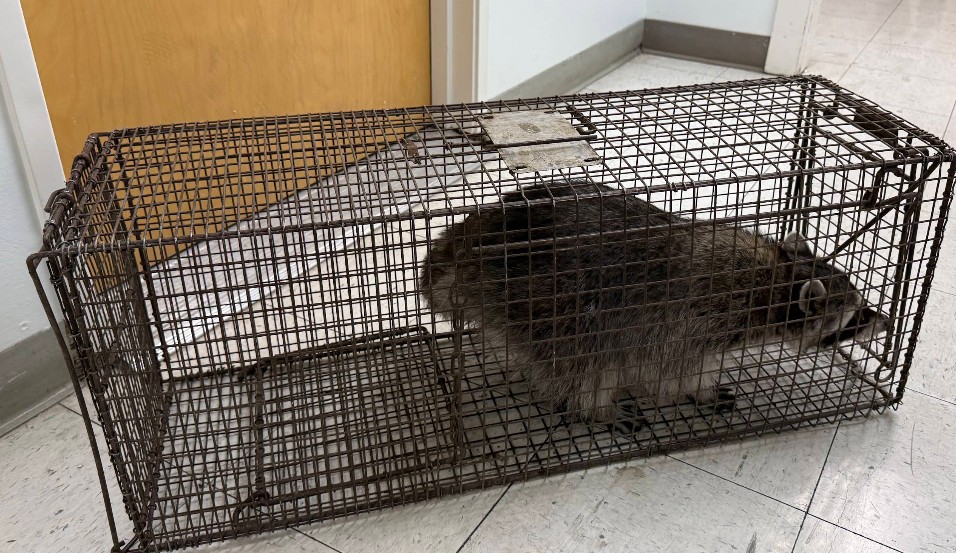
- Humane trapping or eviction For a lone adult, direct trapping at the entry point; for a suspected maternal den, a one-way door and, where appropriate, kit reunification, in line with the approach above.
- Exclusion and sealing Once the attic is clear, every entry point gets sealed with heavy-gauge materials — raccoons are strong enough to tear through standard mesh, so this isn't the place to cut corners.
- Latrine cleanup and decontamination Raccoon latrines get removed and the area decontaminated using methods that actually address Baylisascaris eggs, with proper PPE throughout — not a standard household cleaning approach.
- Attic restoration Replacement of compressed or contaminated insulation and a final check of ductwork and wiring for chew damage.
Preventing Raccoons From Coming Back
- Secure trash cans with locking lids, and don't leave pet food outside overnight — this is the single biggest driver of raccoon activity in Sacramento yards
- Cap chimneys, especially on older homes with original, uncapped masonry chimneys
- Trim tree branches back from the roofline and keep an eye on downspouts as a climbing route
- Seal soffit and fascia gaps before they become an entry point, not after
- Schedule a roofline check heading into late winter, ahead of denning season
Sacramento Attic Remediation After Raccoon Removal
- Cleanup of latrine sites, urine staining, and any nesting debris left behind
- Removal and replacement of insulation that's been compressed, soiled, or contaminated — raccoon latrines in particular usually mean the affected insulation needs to go, not just be cleaned
- Rodent- and wildlife-resistant insulation options for homeowners who want extra protection against a repeat visit from raccoons, squirrels, or rats alike
Cost of Attic Raccoon Removal in Sacramento
Every job is priced after inspection, since raccoon jobs vary more than most — a single adult with minimal damage is a very different job from a maternal den with months of latrine buildup. General ranges homeowners in the Sacramento area typically see:
- Inspection: Typically $75–$150
- Trapping or eviction: Roughly $150–$500 per animal
- Exclusion and sealing: $500–$1,200+ (depends on entry points)
- Latrine cleanup and decontamination: $250–$800+ for significant buildup
- Full attic restoration (insulation replacement): Can run into the low thousands for heavily contaminated attics
A quick inspection tells us which end of that range applies to your situation.
Why Choose Sacramento Rodent Expert for Attic Raccoon Problems
- Licensed rodent control operator, familiar with California Fish and Wildlife regulations for raccoon trapping and release
- Humane methods that account for denning season and dependent kits, not just the fastest removal
- Upfront, itemized pricing before any work begins
- 24/7 availability for active infestations
- Written guarantee on exclusion work
Areas We Serve
Sacramento neighborhoods:
East Sacramento, Land Park, Curtis Park, Midtown, Newton Booth, Oak Park, Tahoe Park, River Park, Pocket-Greenhaven, Natomas, North Natomas, Arden-Arcade, and Campus Commons.
Neighboring cities & towns:
Elk Grove, West Sacramento, Folsom, Rancho Cordova, Citrus Heights, Carmichael, Fair Oaks, Orangevale, Davis, Woodland, Roseville, and Galt.
Don't see your area listed? Give us a call — we'll confirm coverage before you book anything.
FAQs
How is a raccoon in the attic different from a squirrel or rat?
Weight and timing are the fastest clues. Raccoons are much heavier, so their movement sounds like thumping or dragging rather than scurrying, and they're most active at night. They also tend to use one spot as a bathroom rather than scattering droppings, and any entry hole they've made is usually larger and more torn-looking than what a rodent leaves behind.
What do I do if I hear what sounds like raccoon babies crying in my attic?
Don't seal the entry point. If there's a litter of kits inside, sealing them in traps them with their mother outside (or vice versa), which leads to a much worse problem. Call a professional who can confirm whether kits are present and use a humane eviction approach instead of an outright seal.
Can I trap and relocate the raccoon myself?
Not legally, at least not by driving it somewhere else. California requires trapped wildlife to be released on-site or in the immediate vicinity, or humanely dispatched — relocating an animal across town isn't a legal option, which is part of why exclusion is usually the better approach for an occupied attic anyway.
Is raccoon poop in my attic actually dangerous?
It can carry raccoon roundworm, and while confirmed human infections in California are rare, the eggs are hardy and resist normal cleaning products. It's not a reason to panic, but it is a reason to have a latrine properly cleaned up rather than just swept out.
Why do raccoons keep coming back to the same spot on my roof?
Once a raccoon establishes a den, the scent it leaves behind can attract the same animal back, or signal to other raccoons that the spot is a viable den site. That's why permanent, heavy-gauge sealing — not just clearing the animal out — is the step that actually stops the cycle.
